
The primary bottleneck in artificial intelligence has shifted from model intelligence to infrastructure. Applications are rapidly maturing from experimentation to large scale production inference.
Right now, compute resources remain highly fragmented across hyperscalers, neocloud providers, and GPU marketplaces. Companies face a complex, inefficient environment where legacy providers often lock customers into long-term contracts with less flexibility. This can hamper rapid scaling and makes it incredibly difficult to optimize for cost, performance, and reliability simultaneously. The industry as a whole has been heavily focused on optimizing per token costs but the overall volume of token consumption and especially with inference time compute and agentic workflows is exploding.
Meanwhile existing platforms provide raw access to compute, engineering teams are still stitching together custom systems to manage workload placement and ensure reliability across different providers and regions. This results in months of integration work, unpredictable performance, and significant operational overhead just to get production workloads running. As more companies move toward choosing open-weight models and endpoints, marrying the right model for the right workflow, the demand for flexible, scalable, and cost-efficient infrastructure is accelerating.
That is why Touring Capital is thrilled to announce our co-lead investment in Parasail’s Series A. Parasail is building the AI Supercloud—a global, programmable layer giving developers instant, contract-free access to the world’s GPU supply.
Abstracting Complexity with Inference as Code
Parasail powers this AI Supercloud through a sophisticated global scheduling and orchestration layer that completely abstracts away underlying infrastructure complexity. The platform champions a “shift-left” developer mindset by introducing the concept of Inference as Code. Application teams can stand up massively scalable, production-ready AI endpoints in under five minutes with just a few lines of code.
Teams can leverage a range of deployment options—including serverless, batch, and dedicated compute—to hit aggressive targets on latency, throughput, and tokens per second.
Built for Multi-Agent Workflows and Heterogeneous Compute
Crucially, Parasail’s highly composable endpoint architecture naturally lends itself to complex, multi-agent workflows. As enterprise applications increasingly rely on interacting ensembles of specialized agents, developers can effortlessly route tasks to the precise model required for each specific step of the workflow, ensuring optimal performance at every layer.
Furthermore, the platform is fundamentally designed for a heterogeneous inference infrastructure. It natively supports a wide variety of hardware accelerators—routing dynamically across different flavors and generations of Nvidia silicon as well as ready for emerging inference architectures. Application developers bypass manual hardware provisioning entirely. They simply specify their desired parameters for token cost and quality level. Parasail’s system ingests real-time telemetry and actively manages the control plane to execute those workloads on the most efficient hardware available, driving 15x to 30x cost reductions while scaling seamlessly through demand spikes.
Since launching, Parasail has scaled rapidly, now processing over 500 billion tokens per day for customers like Elicit, Mem0, Gravity, Kotoba, and Venice. The accumulated telemetry continuously improves placement decisions, creating a powerful flywheel where increased usage drives stronger unit economics and deeper integration into customer workflows.
Leadership Built for the Hardest Problems
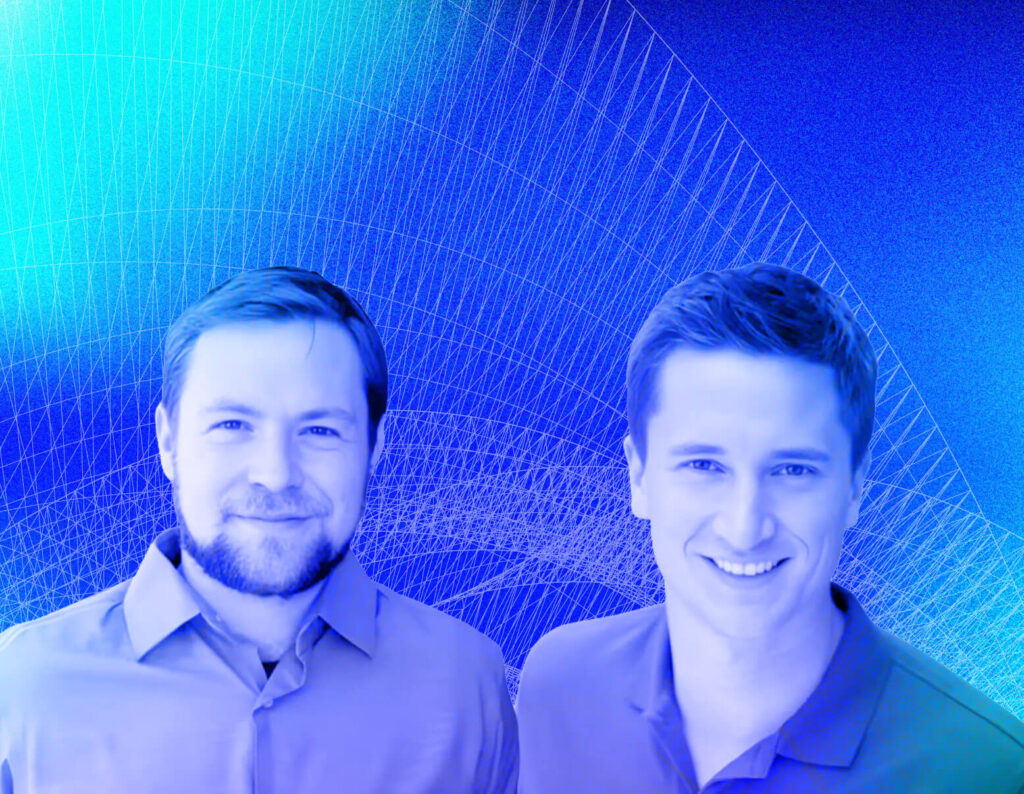
Tackling infrastructure at this scale requires a unique blend of expertise across hardware, distributed systems, and AI. Parasail is led by CEO and co-founder Mike Henry, whose “full stack” credibility in the space gives us a lot of conviction.
After finishing his PhD in Electrical and Computer Engineering from Virginia Tech, Mike has spent his career building high-performance AI infrastructure from the ground up. Having previously founded a chip company and raised $165M—and later serving as Interim Chief Product Officer at Groq, he deeply understands the complexities of the hardware-software divide and what it takes to compete with industry heavyweights. Mike and his team possess the exact technical pedigree required to solve the complex permutation problems of global workload management. Their approach reflects a core thesis we share at Touring Capital: AI builders must be free to focus on shipping great products, leaving the infrastructure orchestration to purpose-built platforms.
Co-founder Tim Harris is someone we have known for many years as well going back to the founding days of Swift Navigation. Tim complements Mike really well on the business and operational side and that is the founding team blueprint that really resonated with us. We are incredibly proud to partner with Mike & Tim and the entire Parasail team as they build the foundational infrastructure layer powering the next generation of AI applications!